Private Accademia Gallery Tour: A Different Way to Experience David
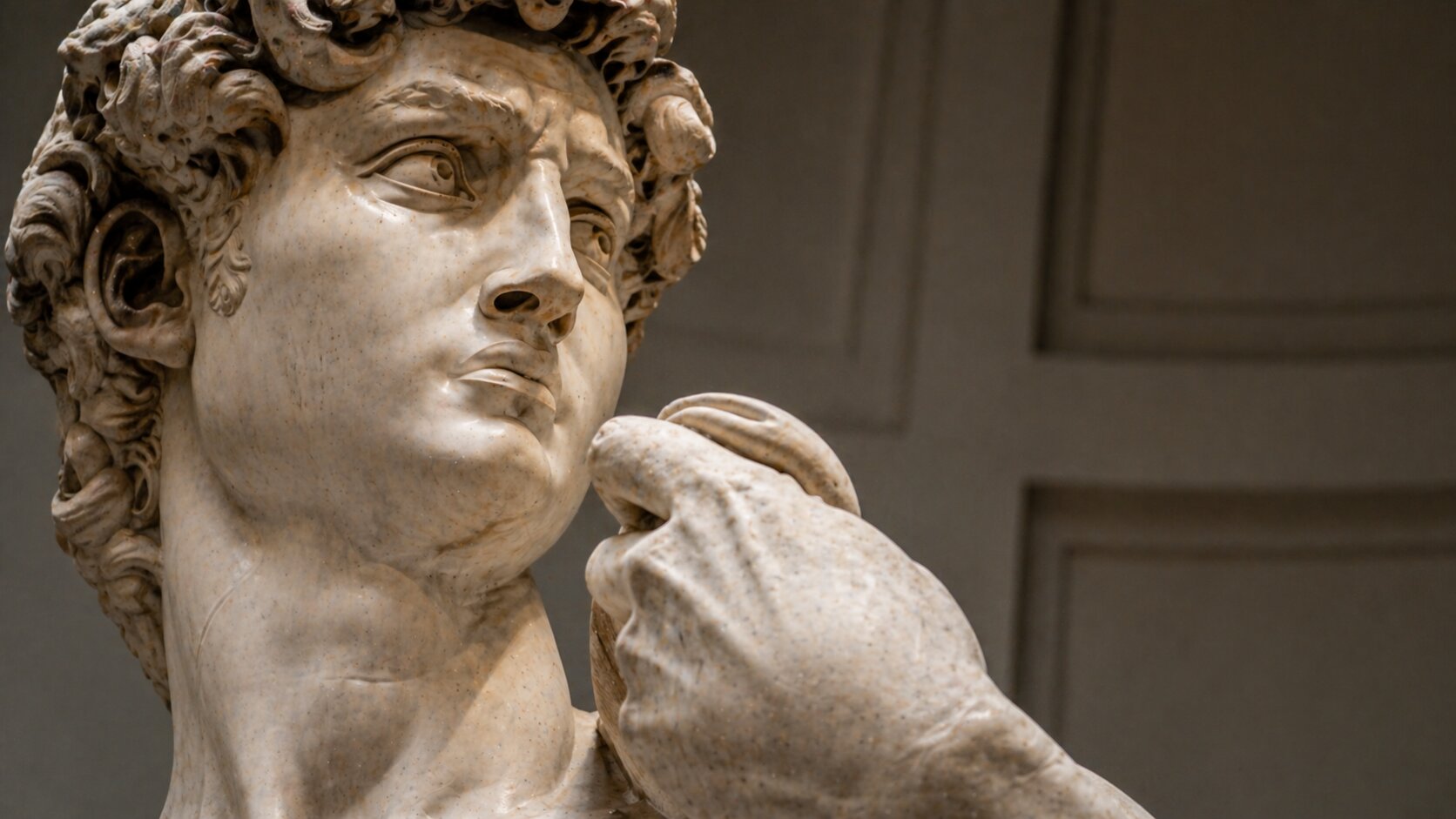
The Accademia Gallery is often approached with a single objective: to see Michelangelo’s David.
And yet, the way the museum is experienced matters as much as what it contains.
A private Accademia Gallery tour transforms the visit from a brief encounter with a masterpiece into a more considered exploration of sculpture, painting, and the cultural ambition of Renaissance Florence.
Beyond a Single Masterpiece
David dominates the space. His scale, his precision, his presence naturally draw attention.
However, the Accademia was never meant to be experienced as a single moment.
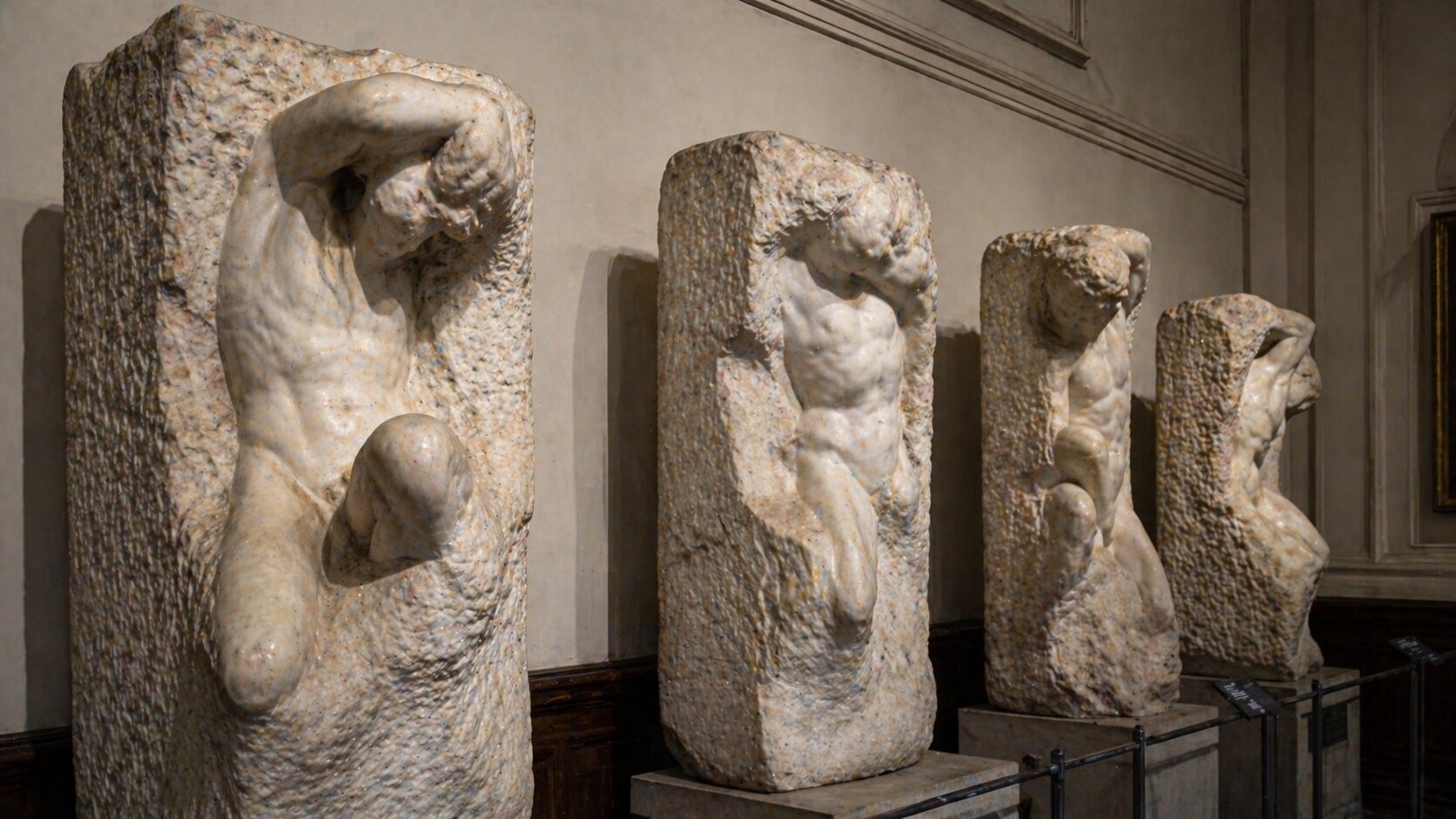
The unfinished Prisoners, the early Florentine paintings, and the quieter sections of the museum all contribute to a narrative that extends far beyond one sculpture.
For a deeper understanding of what the museum reveals beyond its most famous masterpiece, this guide explores it in greater detail: Accademia Gallery Explained Beyond David.
Why the Accademia Can Feel Rushed
The popularity of the museum creates a particular rhythm.
Visitors often move quickly through the galleries, pausing briefly before David before continuing toward the exit. As a result, much of what surrounds the sculpture remains unnoticed.
This is not a limitation of the collection.
It is a question of pacing.
What Changes in a Private Accademia Gallery Tour
A private Accademia Gallery tour introduces a different tempo.
Instead of moving with the flow of the crowd, the visit becomes more deliberate. You may pause before the Prisoners and consider their unfinished forms. You may spend time observing how light interacts with the marble of David.
In this way, the museum begins to unfold as a sequence of ideas rather than a checklist of highlights.
In contrast to standard visits, the experience adapts to curiosity rather than time constraints.
From Observation to Interpretation
Seeing a sculpture and understanding it are not the same.
Michelangelo’s work, in particular, benefits from context. The tension within the Prisoners, the political meaning behind David, and the evolution of Florentine art all contribute to a more complete reading of the space.
A private setting allows these connections to emerge naturally. Questions can develop. Observations can deepen. The visit becomes less about recognition and more about interpretation.
Space, Silence, and Focus
In a museum as visited as the Accademia, space becomes a form of luxury.
Not physical exclusivity, but the ability to experience artworks without constant interruption.
Private Accademia Gallery tours create moments of relative calm. Even within a busy environment, the rhythm slows. Attention becomes more focused.
This shift may seem subtle, yet it transforms the overall experience.
A Broader Perspective on Florence’s Museums
The dynamics that shape the Accademia are not unique.
Across Florence, major museums present the same challenge: how to move beyond accumulation and toward understanding.
A similar approach can be found in a Private Uffizi Gallery Tour Experience, where pacing and context redefine how art is experienced.
Who a Private Accademia Gallery Tour Is For
A private Accademia Gallery tour is particularly suited to travelers who value depth over speed.
It offers clarity for first-time visitors, and a more nuanced perspective for those returning to Florence.
Couples, families, and art enthusiasts often find that a private format allows for a more engaging and less fragmented experience.
A More Meaningful Encounter with David
David remains the central presence of the museum.
Yet when seen within context, his meaning expands.
He is no longer only a symbol of artistic perfection. He becomes part of a larger story one that includes struggle, ambition, and the evolution of form.
This shift is what defines a private visit.
Not simply seeing more, but understanding more.
For those interested in experiencing the Accademia through a more thoughtful and curated approach, you can explore
private Accademia Gallery tours with skip-the-line access to David, designed to bring clarity, context, and a more personal rhythm to one of Florence’s most visited museums.